
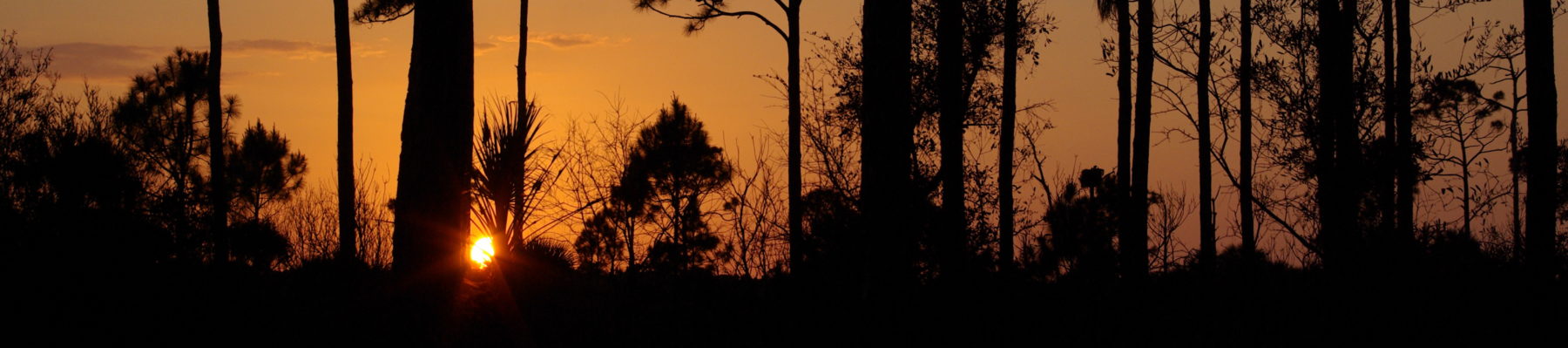

Have you spent months worrying about drought, only to find that now the daily summer rain is creating a completely different problem for your prescribed fire burn plan?
In central and southern Florida, prescribed fire is not just an ecological preference; it is a management necessity. And in 2026, that management picture has shifted. We have been dealing with a severe drought, but as we transition out of it and back into a more typical pattern of seasonal daily rain, the challenge for ranch managers is not gone; it has simply changed.
At Natural Resources Associates, we understand that you aren’t just managing for “ecology”: you’re managing for a bottom line that depends on healthy cattle, productive land, and realistic operational timing. The good news? The goals of a high-performing cattle operation and a high-functioning ecosystem are still closely aligned when it comes to prescribed fire.
In this post, we’ll break down the technical “why” behind the 3–5 year burn cycle, how to pivot your strategy as 2026 shifts from drought into daily rain, and how to navigate the permitting landscape to keep your operations moving forward.
The 3–5 Year Burn Cycle: The Ecological and Economic “Sweet Spot”
If you’ve spent any time reading about Florida rangeland, you’ve likely heard the 3–5 year figure cited as the gold standard. But why that specific window?
From a cattle management perspective, prescribed fire is the most cost-effective way to reset the clock on your pastures. After a burn, the flush of new growth is significantly higher in crude protein and minerals than the “rough” it replaces. However, burning too frequently (every year) can actually deplete soil nutrients and weaken the root systems of your preferred forage grasses.
From a wildlife and ecosystem perspective, the 3–5 year interval matters for far more than a single species. Gopher Tortoises, quail, and deer all benefit from the structure and plant response that fire maintains, but the bigger point is that prescribed fire is essential for the health of the environment as a whole. Open conditions, diverse ground-cover, and regular disturbance support the broader system: not just the animals you notice first, but also the grasses, forbs, pollinators, and soil processes that make these landscapes function.
Specific ecosystems do require different fire return intervals, and a one-size-fits-all prescription is not realistic across Florida. But for maintaining healthy grasslands and open pine flatwoods: the same systems that are often the most productive for cattle: the 3–5 year cycle is typically the right target. It helps prevent woody encroachment, maintains usable forage, and keeps the habitat in the open, workable condition that both wildlife and ranch operations depend on.
Think of that kind of well-managed habitat as a gated community; one where wildlife and cattle can be integrated successfully, but high-density development and unchecked woody overgrowth do not fit.
Key Takeaway: A 3–5 year interval is one of the most practical ways to maintain productive forage, healthy grasslands, and open pine flatwoods while supporting the broader ecosystem that depends on regular fire.

Managing the 2026 Weather Shift: From Drought to Daily Rain
Drought is not unusual in Florida. It is a recurring management issue, and most experienced land managers know they will have to work through some years when the ground is too dry, the KBDI is elevated, and the risk of rekindles makes prescribed fire much harder to execute safely.
But what happens when the pattern shifts? That is where many ranch managers are right now. We are moving out of severe drought conditions and into the seasonal rhythm of daily rain. On paper, that may sound like a relief. In practice, it requires a professional pivot.
Why? Because the same weather that reduces drought stress can also make prescribed burning much more difficult.
Daily rain creates several practical problems at once:
- High humidity: Fine fuels simply do not dry as efficiently, even when the morning starts with decent conditions.
- High fuel moisture: The grass will not always carry fire the way your burn plan needs it to. You may have authorization in hand and a crew ready to go, but the unit will not burn cleanly or consistently, or maybe not at all.
- A very narrow operating window: In many cases, you are trying to work between a brief morning dry-out and an afternoon storm track. That window can be so tight that a burn is technically possible, but operationally unrealistic.
- Smoke dispersion challenges: Daily rain patterns, variable winds, and heavy atmospheric moisture can trap smoke lower to the ground or shift it in ways that create problems near roads, neighboring properties, or other smoke-sensitive areas.
- Access limitations: Wet roads, soft edges, and flooded low spots can make it difficult to get crews and equipment into units safely, especially on larger working ranches.
So how do you adjust without losing ground on your 3–5 year burn cycle?
- Stay committed to the 3–5 year target: The weather may force a delay, but it should not change the core management recommendation. The goal is still to keep fire on the landscape often enough to prevent woody encroachment and maintain forage quality.
- Be ready to move quickly: During the rainy season, successful prescribed fires often depend on being prepared to act during a short, workable window rather than waiting for a long stretch of ideal weather that may never come.
- Sequence your units carefully: Higher, better-drained units may give you the best chance of success when lower or marsh-adjacent areas stay too wet to carry fire or support equipment access.
- Focus on Small Units: Burning smaller units that can be completed in a short amount of time is critical during unstable weather patterns. This is also best practice for both range and wildlife management, as it creates a more diverse mosaic of habitat.
- Use mechanical pre-treatment when needed: If fuel conditions are too patchy or damp for an effective burn, mowing or roller chopping can help reset the unit and make the next burn window more manageable.
- Do not force it: A poor burn day in the rainy pattern can produce patchy fire, weak consumption, smoke headaches, and unnecessary liability. It is better to wait than to put fire on the ground when the unit, the weather, and the access conditions are all working against you. Sometimes, its better to wait for the next season. It is a 3 -5 year window, after all, but even an occasional longer wait for your prescribed fire isn’t the end of the world.
Important to Note: The management challenge in 2026 is not just drought or just rain. It is the pivot between the two. If you plan ahead, keep your burn units prioritized, and stay flexible, you can still protect your forage base and ecological goals without creating avoidable delays or compliance problems.
It is also worth mentioning that there is still some debate around growing season (Summer) burns, and you will hear different opinions depending on who you ask. But most biologists and land managers, including Natural Resources Associates, agree that prescribed fires during the growing season are highly effective and, in many cases, more natural for Florida systems. Cooler-season fires do have their place, especially when restoring overgrown ecosystems, or when you need consistently favorable weather to burn a number of units. From an ecological and practical standpoint, though, growing season burns for maintenance of a healthy system are an important part of a long-term program when they can be accomplished.
Integration with Ranch Operations: The Fire and Grazing Dance
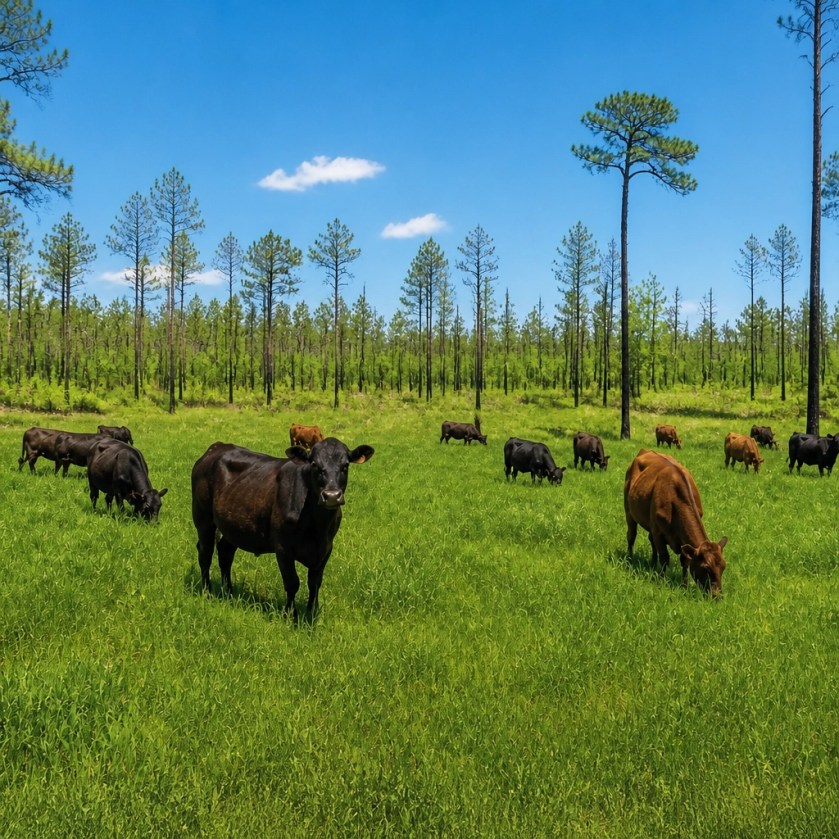
One of the most common mistakes we see is burning a pasture and immediately turning the herd back onto it. While the cattle love the new growth, “over-grazing the flush” can damage the long-term health of your pasture.
As we discussed in our previous post on Integrating Cattle Ranching With Ecosystem Management, the synergy between cows and fire is a powerful tool. By rotating your cattle away from a freshly burned unit for 30–60 days, you allow the native grasses (like wiregrass or bluestem) to establish a strong root system.
When the cattle return, they find a “gated community” of high-quality forage that can support higher stocking rates than unmanaged land. This mosaic of burned and unburned units across your ranch also ensures that wildlife like the Florida Scrub-Jay and Gopher Tortoise have “escape cover” nearby during and after the fire.
Liability, Permitting, and the Legal Landscape
Let’s talk about the part that keeps most ranch managers up at night: Liability.
Florida has some of the most progressive prescribed fire laws in the country, but they only protect you if you follow the rules to the letter. This isn’t just about lighting a match; it’s about a documented Prescribed Burn Plan.
To receive the liability protection offered under Florida law, your burn must:
- Be conducted by a Certified Prescribed Burn Manager (CPBM).
- Have a written, signed Prescribed Burn Plan on-site.
- Obtain a daily Burn Authorization from the Florida Forest Service.
- Maintain a specific distance and smoke management protocol near “smoke-sensitive areas” like highways and hospitals.
How Natural Resources Associates Helps:
We don’t just tell you why to burn; we handle the “how.” Our team provides comprehensive support for Local, State, and Federal Permitting. We coordinate with the Florida Forest Service to ensure your burn planning, authorization process, and on-the-ground execution are handled professionally and that you are protected.
Whether you are looking to manage a specific listed species or simply improve your rangeland, we can draft the prescribed fire plans and coordinate the crews needed to execute a safe, professional burn.

Case Study: Success in the Florida Wildlife Corridor
Look at the success stories coming out of the Florida Wildlife Corridor. Large-scale ranches in the corridor that have maintained a consistent 3–5 year burn cycle have seen a dramatic increase in both cattle productivity and “umbrella species” like the Gopher Tortoise.
By maintaining these fire-dependent flatwoods, these ranches have positioned themselves as critical links in the state’s conservation network. This often opens doors for Conservation Easements, which can provide significant financial incentives while allowing the ranch to remain a working operation. It’s a classic win-win situation: the environment gets the prescribed fire it needs, and the rancher gets the financial certainty and land quality they deserve.
The Bottom Line: Plan Ahead or Get Burned
Prescribed fire is a “use it or lose it” tool. If you skip too many cycles, the fuel buildup makes the eventual fire too dangerous to manage, often leading to wildfires that destroy fences, timber, and property during drought years. But it isn’t all lost, and we can help with restoration, as well.
Don’t let the 2026 weather patterns stop your management progress. Planning a burn takes time: permits, fireline preparation, and weather monitoring can take months. If you wait until the “perfect day” to start your paperwork, you’ve already missed your window.
If you need help developing a 2026-2027 burn plan that balances your cattle operations with environmental compliance, reach out to us at Natural Resources Associates. We bring decades of Florida-specific expertise to your gate, helping you navigate the regulatory landscape with the certainty your business needs.
Contact Natural Resources Associates Today to schedule a site evaluation or to discuss your prescribed fire permitting needs.